Planning Char Dham Yatra from Mumbai is not just a travel decision — it is a logistical project that requires layered thinking. The reason is simple. You are moving from a coastal metro city at sea level to Himalayan terrain that rises above 3,000 meters, where oxygen levels drop, weather shifts quickly, roads narrow into mountain edges, and travel speed reduces drastically compared to highways in Maharashtra.
Most first-time pilgrims assume the challenge lies in devotion or darshan rush. In reality, the challenge lies in planning structure. Poor timing, tight flight schedules, lack of acclimatization, and unrealistic daily travel targets are what make the yatra exhausting instead of uplifting.
If you structure it correctly, this journey becomes transformative. If you rush it, it becomes physically draining.
Let’s plan it the right way.
Understanding the Char Dham Circuit Before You Plan
The Uttarakhand Char Dham circuit includes four Himalayan shrines visited in a clockwise order:
-
Yamunotri
-
Gangotri
-
Badrinath
These temples remain open only for approximately six months each year due to extreme winter snowfall. The journey traditionally begins from Haridwar, Rishikesh, or Dehradun, which serve as gateway cities to the Garhwal Himalayas.
The order is important because altitude gradually increases. Yamunotri and Gangotri help your body adjust before you reach Kedarnath, which sits at higher elevation and requires trekking.
When planning Char Dham Yatra from Mumbai, understanding this sequence helps you design an itinerary that respects both terrain and body capacity.
When Should You Plan Char Dham Yatra?
Timing determines 40% of your experience.
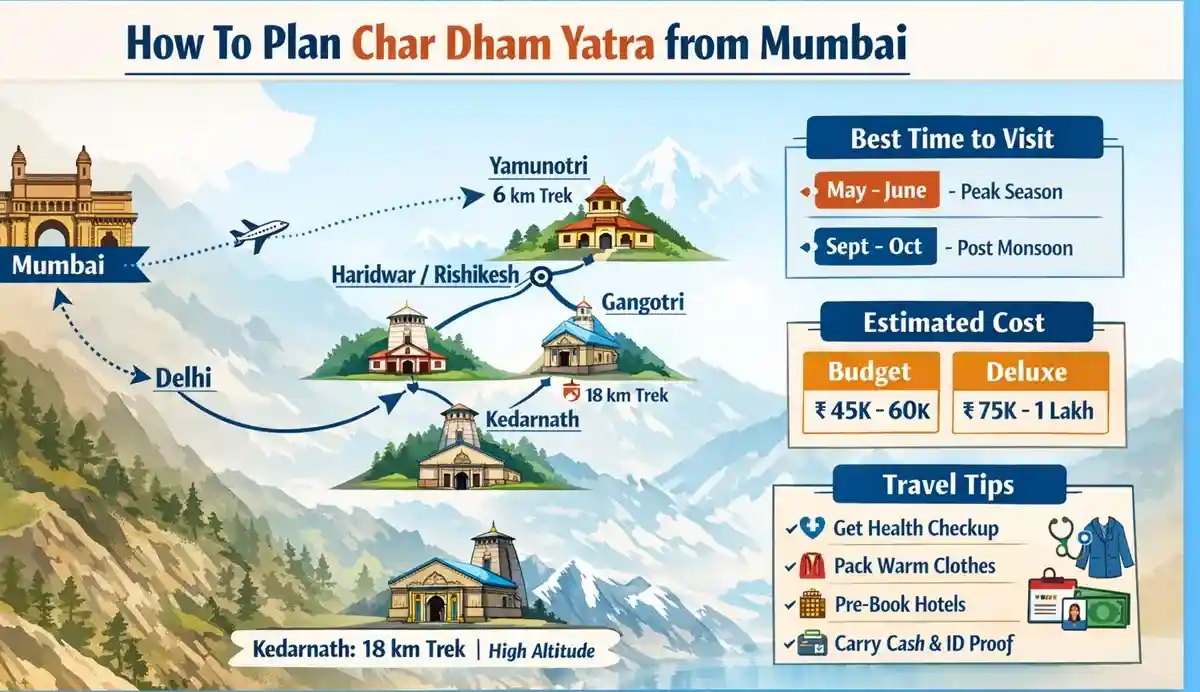
May to June
Clear roads. Full access. Peak crowd. Higher hotel prices.
This is the safest window weather-wise, but also the busiest. Darshan queues can extend for hours, especially at Kedarnath.
September to Early October
Post-monsoon freshness. Sharper mountain visibility. Slightly lower crowd pressure.
This window is preferred by many experienced travelers because the heavy monsoon rains have subsided.
Avoid July and August unless absolutely necessary. According to repeated seasonal reports by The Times of India and Hindustan Times, landslides and road blockages are common during peak rainfall weeks. When routes close, schedules collapse.
If you are flying from Mumbai, always keep one buffer day before your return ticket.
Reaching Uttarakhand from Mumbai
The first real decision in planning Char Dham Yatra from Mumbai is how you reach Uttarakhand.
By Air (Recommended for Most Pilgrims)
Mumbai to Dehradun flight duration is around 2–2.5 hours.
Airport: Jolly Grant Airport
Flight fares fluctuate between ₹10,000 and ₹25,000 for round trip depending on season and booking window.
Flying conserves energy. Considering you will spend long hours on mountain roads afterward, saving physical stamina at this stage is smart.
By Train (Budget but Time-Heavy)
Mumbai to Haridwar/Dehradun trains take 24–30 hours. While economical, this adds fatigue before the mountain journey begins.
For elderly pilgrims, flight is usually safer and more comfortable.
Char Dham Yatra Route Map from Mumbai
Many pilgrims from Mumbai get confused about how the journey actually unfolds on the ground.
In real life, the Char Dham Yatra is not one straight route. It’s a staged mountain circuit starting from either Haridwar or Rishikesh.
Step-by-Step Route Overview
| Stage | Route | Distance | Travel Time |
|---|---|---|---|
| 1 | Mumbai → Delhi (Flight/Train) | ~1,400 km | 2 hrs (flight) |
| 2 | Delhi → Haridwar/Rishikesh | 220 km | 5–6 hrs |
| 3 | Haridwar → Barkot (Yamunotri base) | 180 km | 7–8 hrs |
| 4 | Barkot → Yamunotri Trek | 6 km trek (one way) | 4–6 hrs |
| 5 | Barkot → Uttarkashi (Gangotri base) | 100 km | 4–5 hrs |
| 6 | Uttarkashi → Gangotri | 100 km | 4–5 hrs |
| 7 | Uttarkashi → Guptkashi (Kedarnath base) | 220 km | 9–10 hrs |
| 8 | Kedarnath Trek | 16–18 km | 6–10 hrs |
| 9 | Guptkashi → Badrinath | 200 km | 8–9 hrs |
| 10 | Return to Haridwar | 320 km | 10–12 hrs |
What most people don’t realize is that mountain driving time is unpredictable. Landslides and traffic jams are common during peak season.
Structuring the Ideal 12-Day Itinerary
Trying to finish Char Dham in 8–9 days from Mumbai often leads to burnout. A 12-day structure allows proper pacing.
| Day | Route | Purpose |
|---|---|---|
| 1 | Mumbai → Dehradun | Arrival & rest |
| 2 | Dehradun → Barkot | Transition into hills |
| 3 | Yamunotri visit | First shrine |
| 4 | Barkot → Uttarkashi | Gradual altitude gain |
| 5 | Gangotri visit | Second shrine |
| 6 | Uttarkashi → Guptkashi | Long scenic drive |
| 7 | Kedarnath trek | Main physical effort |
| 8 | Return & recovery | Rest |
| 9 | Guptkashi → Badrinath | High altitude drive |
| 10 | Badrinath darshan | Completion |
| 11 | Return to Rishikesh | Descend altitude |
| 12 | Fly back to Mumbai | Buffer included |
Notice how altitude builds gradually. This is deliberate.
Kedarnath Trek
Kedarnath is the most physically demanding part of Char Dham Yatra.
The trek from Gaurikund is approximately 16–18 km uphill. Even if you are moderately fit, the altitude slows you down.
Options include:
-
Walking
-
Pony
-
Palki
-
Helicopter from Phata/Sersi
Helicopter services typically range between ₹7,000–₹12,000 per person for round trip, subject to official rate revisions and weather clearance.
Altitude sickness is common among those who rush the climb. Hydration, slow pacing, and proper warm clothing are essential.
Cost Breakdown (Realistic 2026 Estimate)
Below is a practical cost range for Char Dham Yatra from Mumbai.
| Component | Budget | Deluxe |
|---|---|---|
| Flights | ₹12,000 | ₹22,000 |
| Road Transport | ₹45,000 (shared) | ₹75,000 (private SUV) |
| Hotels | ₹15,000 | ₹30,000 |
| Food | ₹6,000 | ₹10,000 |
| Miscellaneous | ₹5,000 | ₹8,000 |
Total estimated per person:
Budget: ₹45,000–₹60,000
Deluxe: ₹75,000–₹1,00,000
Helicopter full-circuit packages from Dehradun may range between ₹1.8–2.5 lakh per person.
How to Choose Between Road and Helicopter
Helicopter saves time but increases cost significantly. It also depends heavily on weather clearance. Flights can be delayed for hours.
Road travel gives you gradual spiritual build-up and landscape exposure. But it demands stamina.
For senior citizens with knee issues, hybrid planning works well — road for Yamunotri and Gangotri, helicopter for Kedarnath.
Registration and Government Compliance
Char Dham registration is mandatory. Pilgrims must register online through the official Uttarakhand tourism portal.
Carry:
-
Valid ID proof
-
Printed registration
-
Emergency contact list
Registration helps authorities manage crowd flow and emergency tracking.
Medical Fitness & Health Advisory
This is one of the most ignored but critical aspects of planning Char Dham Yatra.
Altitude ranges from 3,100 meters to 3,583 meters. Oxygen levels drop significantly, especially at Kedarnath and Badrinath.
According to advisories issued by the Uttarakhand Tourism Development Board, senior citizens and pilgrims with heart or respiratory issues should undergo a medical checkup before travel.
Who Must Be Extra Careful?
-
People above 60 years
-
Heart patients
-
Asthma patients
-
Diabetics
-
Those with knee problems (for Kedarnath trek)
Practical Ground Tip
-
Spend 1 night in Haridwar to acclimatize.
-
Avoid alcohol and heavy food before trek days.
-
Start trekking early morning.
Carrying portable oxygen cans is common now, but they are emergency support only — not a substitute for fitness.
VIP Darshan & Special Entry Process
Many Mumbai pilgrims ask this.
There is no permanent VIP darshan system officially guaranteed. However:
-
Special darshan passes may be available through temple committees.
-
Helicopter bookings sometimes include priority darshan.
-
Senior citizen lines exist at some temples.
Important: Always verify through the official Uttarakhand government portal before trusting third-party agents.
Travel Insurance – Is It Necessary?
Short answer: Yes.
Mountain travel involves risk. Sudden weather change, roadblocks, medical emergencies — all happen every season.
According to reports in The Times of India, weather-related disruptions have repeatedly affected Char Dham routes in recent years.
A basic domestic travel insurance plan covering:
-
Medical emergency
-
Evacuation
-
Trip delay
-
Accidental coverage
Costs between ₹300–₹700 for a 10–12 day trip.
That’s a small price for peace of mind.
Temple Opening & Closing Season Details
Char Dham temples open around April/May and close around October/November (after Diwali period).
Exact dates are decided annually by temple committees and announced officially.
You must always check the official state tourism website before booking.
Network Connectivity & Digital Payments Reality
Important ground truth.
-
Network works in Haridwar and Rishikesh.
-
Weak or no signal near Yamunotri and Kedarnath.
-
Badrinath has relatively better connectivity.
Carry cash.
UPI works in main towns but may fail in remote stretches.
Women & Senior Citizen Travel Advice
From real yatra feedback:
-
Women should avoid late evening travel in isolated stretches.
-
Senior citizens should consider helicopter for Kedarnath.
-
Avoid solo trekking after 2 PM due to weather change risk.
Packing Strategy for Mumbai Travelers
Moving from Mumbai’s humid climate to dry Himalayan cold requires careful packing.
Essential items:
-
Two thermal sets
-
Down or padded jacket
-
Waterproof layer
-
Trekking shoes with grip
-
Gloves and woolen cap
-
Sunglasses (UV exposure high)
-
Personal medicines
-
ORS sachets
Avoid overpacking. You will lift your luggage frequently.
Common Planning Mistakes
-
Booking tight return flights
-
Overestimating personal fitness
-
Ignoring weather updates
-
Choosing cheapest package blindly
-
Attempting to compress itinerary
Most stress happens due to unrealistic time expectations.
Health & Safety Framework
-
Start drives early morning
-
Avoid night hill driving
-
Eat light meals
-
Stay hydrated
-
Monitor weather daily
Altitude symptoms should never be ignored.
Environmental Responsibility (Very Important)
The Uttarakhand government frequently appeals to pilgrims to maintain cleanliness.
Do not:
-
Throw plastic bottles
-
Use single-use plastics
-
Pollute rivers
The Himalayas are fragile. Respect the ecosystem.
FAQs
Q-1: How many days are ideal for Char Dham Yatra from Mumbai?
Ans: 12 days including travel buffer.
Q-2: Is helicopter mandatory?
Ans: No, but useful for elderly.
Q-3: What is the most difficult shrine?
Ans: Kedarnath due to trekking.
Q-4: Is the yatra safe?
Ans: Yes, when planned during stable weather.
Q-5: What is the best month?
Ans: May–June or September.
Q-6: Can children go?
Ans: Above 8–10 years manageable.
Q-7: Are ATMs available?
Ans: Limited in upper sectors.
Q-8: Is vegetarian food available?
Ans: Yes, entire route is vegetarian.
Q-9: Is mobile network reliable?
Ans: Limited beyond certain stretches.
Q-10: Should I self-drive?
Ans: Only if experienced in mountain driving.
Q-11: How much cash should I carry?
Ans: ₹5,000–₹10,000 minimum.
Q-12: What is the most important planning advice?
Ans: Add buffer days and respect mountain conditions.
13. Can I drive my own car from Mumbai?
Ans: Yes, but it takes 2–3 days just to reach Uttarakhand. Not recommended unless you have mountain driving experience.
14. Is helicopter safe for Kedarnath?
Ans: Yes, services operate under DGCA regulations, but weather can cause delays.
15. Are children allowed?
Ans: Yes, but trekking difficulty must be considered.
16. Is vegetarian food compulsory?
Ans: Yes. Non-veg and alcohol are prohibited in temple zones.
17. Can I do Char Dham in 7 days?
Ans: Possible only with helicopter or very tight schedule. Not recommended for elderly.
18. Is Aadhaar mandatory?
Ans: Yes, required during registration and verification.
19. What happens during landslides?
Ans: Authorities temporarily suspend movement until roads are cleared.
20. Are ATMs available?
Ans: Available in Haridwar, Rishikesh, Uttarkashi, and Joshimath. Limited beyond that.
21. Can I visit Hemkund Sahib along with Char Dham?
Ans: Yes, but it adds 2 extra days and requires another trek.
22. Is mobile registration compulsory?
Ans: Yes. Biometric registration is mandatory.
23. Are ponies safe for Kedarnath?
Ans: Generally yes, but choose licensed operators only.
24. What is the safest month?
Ans: Late May and September are considered stable weather windows.
Final Thought
Planning Char Dham Yatra from Mumbai is about structured patience. The Himalayas operate on their own rhythm. If you align your planning with that rhythm — slow, steady, prepared — the journey becomes deeply spiritual and memorable.