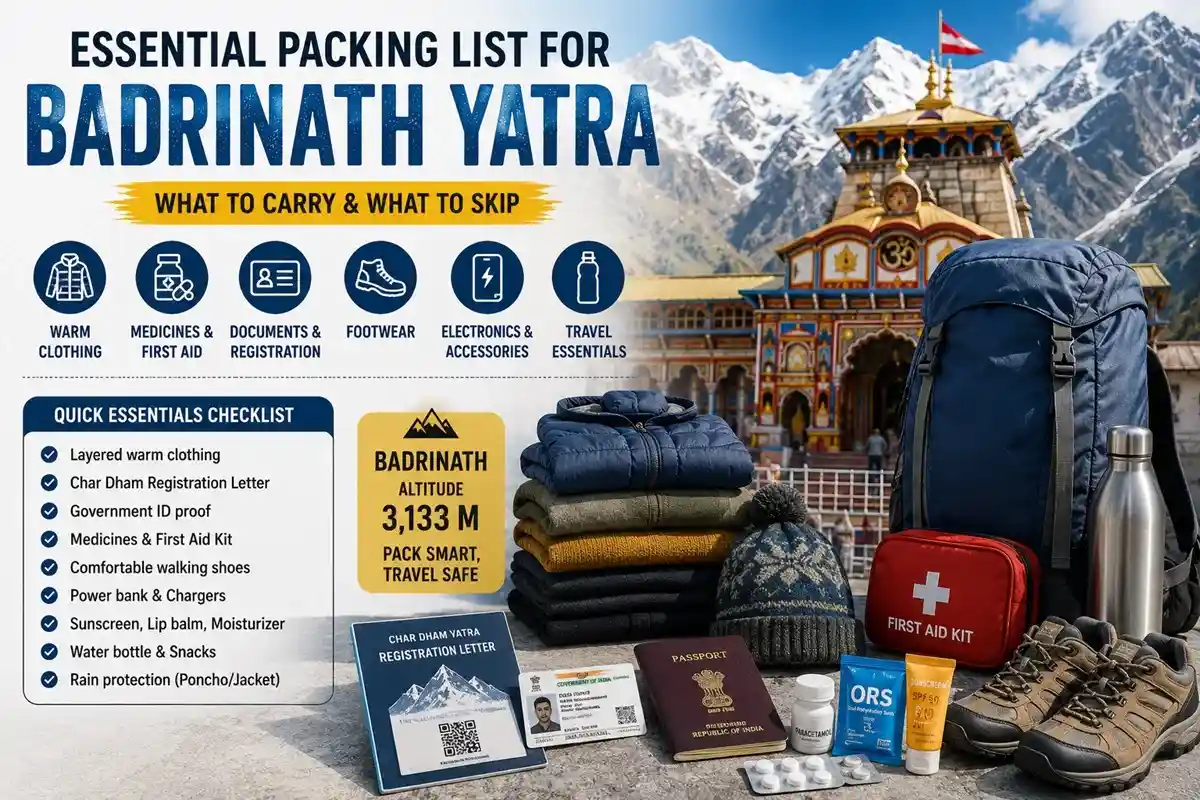
Badrinath sits at 3,133 metres, and that one fact should shape almost everything you pack. Even during the main May–June pilgrimage season, mornings and nights are cold enough to catch first-timers off guard — and while Badrinath and Joshimath do have local markets selling basic woolens and essentials, don’t rely on them for anything specialized or for prescription medicines.
Quick answer: Pack layered warm clothing (even in May–June), your Char Dham registration documents, basic altitude and cold-weather medicines, comfortable walking shoes, and a power bank — mobile networks and charging can get patchy on the higher mountain stretches.
This list covers what actually matters for this specific pilgrimage, not a generic hill-station checklist.
Know the Weather Before You Pack
Badrinath’s temperature swings hard between day and night, and it changes by season too:
| Season | Day Temp | Night Temp | Notes |
| May–June | 11–22°C | 6–12°C | Pleasant days, cold nights |
| July–August | Cooler, wet | Cold | Rain, landslide risk on the route |
| September–October | 8–16°C | 0–5°C | Clear skies, sharp night cold |
Temperature ranges are general seasonal patterns, not a fixed official dataset — the Tourist Care Uttarakhand portal itself provides a live day-by-day forecast pulled from IMD rather than a static monthly table, so check the current forecast a few days before travel.
Even in warm months, pack for winter evenings. The altitude, not the calendar, decides how cold it actually feels once the sun goes down.
Clothing: The Core of Your Packing List
- Thermal inner layers — top and bottom, even for a summer trip
- A heavy fleece or woollen jacket for mornings and evenings
- A waterproof outer shell — sudden rain and wind are common at altitude
- Warm cap, gloves, and a muffler — these make a noticeable difference in cold, windy conditions
- 2–3 pairs of warm socks — easy to forget, genuinely useful on cold mornings
- Comfortable, closed walking shoes with good grip — some walking between vehicle-access points and the temple is common, depending on current traffic and access arrangements, and paths can be uneven or wet
- A compact rain poncho or waterproof backpack cover, in addition to a waterproof jacket — especially useful during the monsoon shoulder months
- A couple of quick-dry regular outfits for the road journey itself, since it’s warmer at lower altitude
- Clean, comfortable, and culturally respectful clothing for darshan — follow any current temple or local access advisory for specifics
Documents You Cannot Forget
- Your Char Dham Yatra Registration Letter (printed copy plus a digital backup) — keep it accessible for verification, and registration itself is mandatory and free via the official Uttarakhand Tourist Care portal
- A government photo ID — Aadhaar, Voter ID, driving license, or passport
- Emergency contact details written down, not just saved on your phone
- Vehicle registration and documents, if you’re traveling by personal or public vehicle
- Optional: a couple of passport-sized photographs, useful for miscellaneous travel formalities
Medicines and Health Essentials
- Personal prescription medicines, in original packaging, more than you think you’ll need, plus a copy of the prescription
- Altitude illness: if you’re concerned about altitude sickness, or have a heart, lung, or blood pressure condition, discuss prevention and treatment with a doctor before the trip — don’t start any altitude medication without medical advice
- Paracetamol, ORS sachets, and anti-nausea tablets — for general aches, dehydration, and motion sickness, not as altitude-sickness treatment
- A basic first-aid kit — bandages, antiseptic, and any personal essentials
- Broad-spectrum sunscreen (SPF 30–50+) and lip balm — UV exposure at this altitude is intense even in cold weather, and it’s easy to underestimate
- Sunglasses, both for glare and for wind protection on open stretches
- Basic hygiene items — tissues, wet wipes, and hand sanitizer, since facilities can be basic in the mountain stretches
Watch for altitude-illness symptoms such as headache, nausea, unusual fatigue, or dizziness. If symptoms worsen, don’t continue further; seek medical advice and descend if advised.
Practical Gear That Actually Helps
- A power bank — useful during long road journeys and when charging isn’t immediately convenient
- A basic flashlight or phone torch — handy backup for guesthouses and evening walks
- A refillable water bottle — so you’re not relying entirely on buying bottled water during the journey
- Dry snacks — energy bars, dry fruits, biscuits, for stretches where food options thin out
- A small daypack for carrying essentials during darshan, separate from your main luggage
- Cash — digital payment availability can vary by shop and network signal, so carry some as a backup
- A basic reusable shopping bag — local shops in Badrinath and Joshimath do stock basic essentials, though don’t rely on them for anything specialized
What You Can Skip
- Heavy suitcases — a duffel bag or soft backpack is far more practical on a mountain trip with multiple stops
- Excess electronics — you won’t have much use for a laptop or extra gadgets
- Fragile footwear or heels — completely impractical on uneven temple paths
- Too many outfit changes — layering the same warm pieces works better than packing bulk
Common Packing Mistakes
- Assuming summer means light clothing — Badrinath’s altitude keeps it cold regardless of the season down in the plains.
- Forgetting the registration letter — verification happens right at the Dham entry gate, and there’s no substitute for having it on hand.
- Packing too much luggage for a trip that involves multiple vehicle changes and narrow mountain roads.
- Skipping sunscreen because it’s cold — UV exposure at altitude doesn’t follow the temperature.
- Not carrying enough cash, assuming digital payments will work everywhere.
Pro Tips for Packing Smart
- Pack in layers rather than one heavy item — layers adjust better to the day-to-night temperature swing.
- Keep your registration letter, ID, and medicines in one easily accessible pouch, not buried in a bag.
- If traveling with elderly family members, pack their prescription medicines separately and clearly labeled.
- Traveling with children? Pack an extra warm layer and a few familiar snacks for them specifically — kids feel the cold and the long drive faster than adults do.
- Roll clothes instead of folding to save space in a smaller duffel bag.
- Check the current weather advisory a day or two before departure and adjust warm-layer quantity accordingly.
FAQs: Badrinath Yatra Packing List
Q-1: What clothes should I pack for Badrinath Yatra?
Pack thermal inners, a warm jacket, a waterproof outer layer, cap, gloves, and comfortable walking shoes — even during the May–June season.
Q-2: Is it cold in Badrinath even in summer?
Yes. At 3,133 metres, mornings and nights stay cold even during the May–June pilgrimage season. Exact temperatures vary by date — check the live forecast on the Tourist Care Uttarakhand portal before you travel.
Q-3: What documents are mandatory for Badrinath Yatra?
A Char Dham Yatra Registration Letter and a government photo ID (Aadhaar, Voter ID, driving license, or passport) are required; carry both a printed copy and a digital backup.
Q-4: Do I need altitude sickness medicine for Badrinath?
If you’re concerned about altitude sickness or have a pre-existing heart, lung, or blood pressure condition, discuss prevention and treatment with a doctor before travel — don’t self-medicate.
Q-5: Is there a dress code for Badrinath Temple?
Wear clean, comfortable, and culturally respectful clothing for darshan, and follow any current temple or local access advisory.
Q-6: Can I use cards or UPI in Badrinath?
Digital payment availability can vary by shop and network signal in Badrinath and Joshimath — carry some cash as a backup.
Q-7: What should I avoid packing for this trip?
Skip heavy suitcases, excess electronics, and impractical footwear — pack light, warm layers instead.
Q-8: Is sunscreen really necessary in cold weather?
Yes. UV exposure at high altitude is intense regardless of temperature, making sunscreen essential year-round.
Q-9: Are shops available in Badrinath if I forget something?
Badrinath and Joshimath have local markets selling basic woolens, snacks, and religious items, but don’t rely on them for anything specialized or for prescription medicines.
Q-10: How many days of clothing should I pack for Badrinath Yatra?
Pack according to your itinerary, plus one extra warm change of clothing in case travel is delayed — laundry options are limited in Badrinath and Joshimath, so layering the same warm pieces works better than packing fresh outfits daily.
Q-11: Do I need trekking gear for Badrinath?
No technical trekking gear is needed since the temple is road-accessible, but sturdy, comfortable walking shoes are still important for uneven paths near the temple.
Q-12: What’s easy to forget when packing for this trip?
A power bank, warm socks, and a printed copy of your registration letter are easy to overlook but genuinely useful on this route.
Final Word
The Badrinath Yatra rewards simple, smart packing over bulk. Layered warm clothing, your registration documents, basic medicines, and a bit of cash will cover almost every situation you’ll actually encounter on this route. Pack light, pack warm, and you’ll spend your energy on the pilgrimage itself rather than managing an overloaded bag through mountain roads.
Suggested Tour: