Starting your journey from Dehradun to Kedarnath Temple is one of the most practical ways to begin the Char Dham pilgrimage. The Dehradun to Kedarnath route combines a long mountain road trip with a high-altitude trek, and for many travelers, it becomes both a spiritual and physical test.
In real life, this journey is not just about reaching a temple. It’s about planning properly, respecting mountain weather, managing stamina, and avoiding common mistakes that first-time pilgrims make.
This detailed guide covers distance, route map, cost breakdown, helicopter services, trek preparation, accommodation, registration, safety precautions, and practical travel advice based on real ground conditions.
Dehradun to Kedarnath Distance & Route
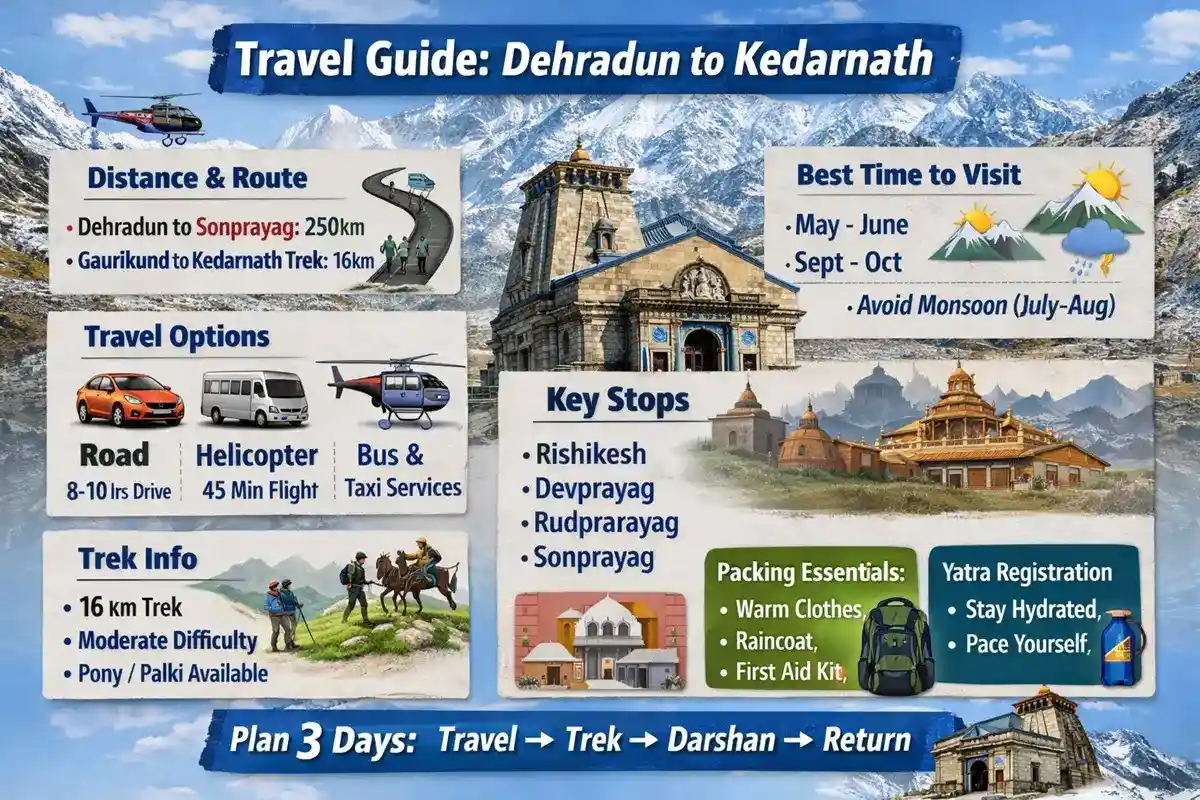
The total Dehradun to Kedarnath journey is divided into two main parts: road travel and trekking.
| Segment | Distance | Mode | Average Time |
|---|---|---|---|
| Dehradun → Sonprayag | 242–250 km | Road | 8–10 hours |
| Sonprayag → Gaurikund | 5 km | Local shuttle | 20–30 min |
| Gaurikund → Kedarnath | 16 km | Trek | 6–8 hours |
The road distance can vary slightly depending on traffic diversions and seasonal conditions.
Total Travel Duration
-
Road journey: 8–10 hours (without long breaks)
-
Trek: 6–8 hours (depending on fitness)
What most people don’t realize is that the final stretch after Sonprayag is tightly regulated. Private vehicles are not allowed beyond Sonprayag. You must take a local shuttle to reach Gaurikund, which is the trek starting point.
Altitude at Kedarnath: 3,583 meters (11,755 feet) above sea level. Oxygen levels are lower compared to Dehradun.
Best Time to Visit Kedarnath
The temple remains open for about six months a year.
Opening: April/May (around Akshaya Tritiya)
Closing: October/November (around Bhai Dooj)
Best Seasons for the Kedarnath Trip
1. May to June (Peak Season)
-
Clear skies
-
Snow visible near temple
-
Heavy pilgrim rush
-
Higher hotel prices
2. September to October (Recommended)
-
Fresh greenery after monsoon
-
Fewer crowds
-
Stable weather
-
Better photography conditions
Avoid: July–August (Monsoon)
During monsoon months, landslides frequently disrupt Char Dham highways. Reports by The Times of India and The Hindu regularly highlight weather-related blockages in Uttarakhand during heavy rainfall.
Temperature Range at Kedarnath:
-
Day: 8°C–18°C
-
Night: 0°C–5°C
Even in June, nights can feel extremely cold.
How to Reach Kedarnath from Dehradun
There is no direct motor road to the temple itself. The Kedarnath route requires road travel up to Sonprayag and then trekking.
Option 1: Self-Drive
Self-driving gives flexibility but requires experience.
Key considerations:
-
Roads become narrow after Rudraprayag.
-
Landslide-prone zones exist near Srinagar and Sonprayag.
-
Fuel stations become limited after Rudraprayag.
Start early morning, ideally before 5:30 AM.
Option 2: Taxi / Cab
Most convenient for families and senior citizens.
| Vehicle Type | Approx One-Way Fare |
|---|---|
| Sedan | ₹6,000–8,000 |
| SUV | ₹8,000–11,000 |
Round-trip packages are usually cheaper.
From practical experience:
-
Confirm whether tolls are included.
-
Check driver’s hill driving background.
-
Clarify night halt charges.
During peak Char Dham season, prices may rise by 20–30%.
Option 3: Bus from Dehradun
Government and private buses operate seasonally.
Route:
Dehradun → Rishikesh → Rudraprayag → Sonprayag
Fare:
₹600–₹1,200 per person.
Travel time may extend to 10–12 hours depending on road conditions.
Complete Road Route: Dehradun → Rishikesh → Devprayag → Kedarnath
The traditional Kedarnath road route passes through spiritually significant towns.
-
Rishikesh – 40 km
-
Devprayag – Alaknanda & Bhagirathi confluence
-
Srinagar
-
Rudraprayag
-
Sonprayag
-
Gaurikund
-
Kedarnath
Road Conditions
-
Dehradun to Rishikesh: Excellent highway
-
Rishikesh to Srinagar: Mostly good
-
Srinagar to Rudraprayag: Moderate
-
Rudraprayag to Sonprayag: Narrow, mountain curves
Traffic increases significantly during May–June.
Major Stopovers & Pilgrimage Sites En Route
Many pilgrims break their journey to avoid exhaustion.
Popular stopovers include:
-
Triveni Ghat
-
Devprayag Sangam
-
Rudranath Temple
Guptkashi is another preferred halt location because it offers decent hotels and medical facilities.
Breaking the trip into two days reduces fatigue before the trek.
Trekking Guide: Gaurikund to Kedarnath (16 km Yatra)
The trek is the core part of the Kedarnath journey.
Distance: 16 km
Elevation gain: Significant
Average time: 6–8 hours
Trek Route Checkpoints
-
Jungle Chatti
-
Bheembali
-
Linchauli
-
Kedarnath Base Camp
Facilities available:
-
Drinking water points
-
Medical assistance
-
Rest shelters
-
Food stalls
Pony & Palki Charges
| Service | Approx Cost |
|---|---|
| Pony | ₹3,000–4,000 |
| Palki | ₹6,000–8,000 |
Rates are regulated by local administration but may vary slightly.
Start the trek before 6 AM. Afternoon weather can change suddenly.
Altitude sickness signs:
-
Dizziness
-
Nausea
-
Headache
Descend immediately if symptoms worsen.
Dehradun to Kedarnath by Helicopter
For travelers with limited time, helicopter services are available.
Direct Helicopter from Dehradun
Flights operate from Sahastradhara Helipad.
Approx cost:
₹80,000–₹1,00,000 per person (same-day return package).
Package usually includes:
-
Return flight
-
VIP darshan
-
Limited waiting time at temple
Helicopter from Phata / Guptkashi
-
Drive from Dehradun to Phata
-
Helicopter ride: 8–10 minutes
Cost: ₹5,000–₹8,000 one way.
Helicopter flights are weather dependent. Delays are common due to cloud cover.
Darshan Timings & Aarti Schedule
At Kedarnath Temple:
-
Temple opens around 4 AM
-
General darshan from 6 AM
-
Evening Aarti around 6 PM
Morning hours are less crowded compared to afternoon.
VIP darshan booking is limited and should be arranged in advance.
Accommodation Guide: Where to Stay Near Kedarnath
Accommodation is basic due to high altitude.
| Location | Type of Stay |
|---|---|
| Guptkashi | Budget & mid-range hotels |
| Sonprayag | Guesthouses |
| Kedarnath | GMVN tents & lodges |
GMVN properties are government-managed and considered reliable.
Book at least 2–3 weeks in advance during peak season.
Essential Packing List
Packing smartly reduces risk.
Clothing
-
Thermal innerwear
-
Woolen jacket
-
Waterproof outer layer
-
Gloves & cap
Trek Essentials
-
Trekking shoes with good grip
-
Rain poncho
-
Walking stick
-
Power bank
Health & Safety
-
Basic medicines
-
ORS packets
-
Sunscreen
-
ID proof
Avoid heavy luggage. Carry only what is necessary.
Yatra Registration & Emergency Contacts for Kedarnath
Registration is mandatory for Char Dham Yatra.
You can register:
-
Online through Uttarakhand government portal
-
Offline at Rishikesh / Haridwar counters
Keep both soft and hard copies.
Emergency services:
-
108 Ambulance
-
SDRF assistance camps
-
Local police checkpoints
Government advisories should always be checked before departure.
Detailed Cost Breakdown
Here’s a realistic cost estimate for a 2–3 day road trip.
| Category | Budget Range (Per Person) |
|---|---|
| Taxi share | ₹3,000–6,000 |
| Private taxi | ₹6,000–12,000 |
| Accommodation | ₹1,000–4,000 per night |
| Food | ₹500–1,000 per day |
| Pony/Palki | ₹3,000–8,000 |
| Helicopter | ₹5,000–1,00,000 |
Estimated total road budget:
₹10,000–20,000 per person (excluding helicopter premium package).
Common Mistakes During Kedarnath Travel
-
Starting road journey late
-
Not hydrating during trek
-
Ignoring weather alerts
-
Overestimating physical fitness
-
Not booking accommodation in advance
On the ground, fatigue and altitude impact are the biggest challenges.
Weather & Altitude Safety Precautions
The Kedarnath trip crosses multiple climate zones.
Morning may feel pleasant in Dehradun, but Kedarnath remains cold throughout.
Safety guidelines:
-
Keep buffer days
-
Avoid trekking after 2 PM
-
Wear layered clothing
-
Follow official instructions
Cloud build-up in afternoon can lead to sudden rain or fog.
Detailed 2–3 Day Itinerary
Many travelers underestimate time management. On paper, it looks like a one-day road trip plus trek. In reality, fatigue builds up quickly.
Here’s a practical itinerary that works well.
Option 1: 2 Days (Fast-Paced Plan)
Day 1
-
5:00 AM – Depart from Dehradun
-
1:30–3:00 PM – Reach Sonprayag
-
Shuttle to Gaurikund
-
Start trek (if physically strong) or stay overnight
Day 2
-
Early morning darshan at Kedarnath Temple
-
Descend trek
-
Return drive toward Dehradun
This schedule is physically demanding. Suitable only for fit travelers.
Option 2: 3 Days (Recommended)
Day 1
-
Dehradun → Guptkashi / Sonprayag
-
Overnight stay
Day 2
-
Early morning trek
-
Temple darshan
-
Overnight stay at Kedarnath
Day 3
-
Descend trek
-
Drive back to Dehradun
This plan reduces exhaustion and allows better acclimatization.
Ground-Level Reality: Road Challenges
On the ground, several factors affect the Kedarnath journey:
-
Narrow mountain bends after Rudraprayag
-
Occasional traffic jams in peak season
-
Police-regulated entry near Sonprayag
-
Limited parking
Early departure reduces stress significantly.
Trek Difficulty Level & Fitness Preparation
The 16 km trek is moderately difficult.
Key factors:
-
Steady incline
-
Cold winds near Linchauli
-
Reduced oxygen levels
From practical experience, people who walk regularly adjust better.
2–3 Week Preparation Plan
-
Daily 3–4 km brisk walk
-
Light stair climbing practice
-
Breathing exercises
-
Avoid smoking before trip
If you have heart or respiratory issues, consult a doctor before planning.
Food & Availability During Yatra
Food options increase during peak yatra season.
Available items:
-
Tea & coffee
-
Maggi & snacks
-
Basic North Indian meals
-
Bottled water
Prices are slightly higher at high altitude due to transport costs.
Carry energy bars and ORS sachets.
Mobile Network & Connectivity
Network coverage is limited after Sonprayag.
Working networks (season dependent):
-
Jio
-
BSNL
Internet speed is unreliable near Kedarnath.
Inform family before starting trek.
Weather Pattern Explained
Weather in Kedarnath valley is unpredictable.
Morning: Usually clear
Afternoon: Cloud build-up
Evening: Temperature drops rapidly
In September–October, mornings are extremely cold.
Always check official weather advisories before departure.
Helicopter vs Road: Which One Should You Choose?
Many pilgrims are confused between helicopter and road.
Helicopter – Best For:
-
Senior citizens
-
Time-bound travelers
-
VIP darshan seekers
Road + Trek – Best For:
-
Spiritual immersion
-
Budget travel
-
Adventure lovers
Helicopter services operate from Sahastradhara Helipad and from Phata/Guptkashi.
Flights remain weather dependent.
Reality: Weather delays are common.
Environmental Responsibility
Kedarnath valley is ecologically sensitive.
Follow these practices:
-
Do not litter
-
Avoid plastic usage
-
Respect local guidelines
-
Use designated toilets
The region has seen severe natural disasters in the past. Responsible tourism matters.
Photography & Scenic Points
Best photography moments occur:
-
Sunrise at Kedarnath Temple
-
Snow peaks behind temple
-
Devprayag confluence
Early morning light gives best results.
FAQ’s
1. What is the distance from Dehradun to Kedarnath?
The Dehradun to Kedarnath distance is about 242–250 km by road up to Sonprayag, plus a 5 km shuttle to Gaurikund and a 16 km trek to reach Kedarnath Temple.
2. How many days are enough for this trip?
A 3-day plan is ideal. Day 1 for road travel, Day 2 for trek and darshan, Day 3 for return. A 2-day trip is possible but tiring.
3. Can we reach Kedarnath directly by car?
No. Private vehicles go only up to Sonprayag. From there, you must take a shuttle to Gaurikund and then trek 16 km.
4. How difficult is the trek?
The trek is moderately difficult due to continuous incline and high altitude. Pony and palki services are available for assistance.
5. What is the taxi fare from Dehradun?
Taxi fare from Dehradun to Sonprayag ranges from ₹6,000–₹11,000 one way, depending on vehicle type and season.
6. Is helicopter service available?
Yes. Helicopters operate from Sahastradhara Helipad. Same-day packages cost around ₹80,000–₹1,00,000 per person.
7. What is the best time to visit?
May–June and September–October are the best months. Avoid monsoon (July–August) due to landslides.
8. Is registration mandatory?
Yes, yatra registration is compulsory. It can be done online or at official counters in Uttarakhand.
9. Is the trip suitable for senior citizens?
Yes, with medical clearance. Many seniors use pony or helicopter services for convenience.
10. What are the temple darshan timings?
General darshan at Kedarnath Temple usually starts around 6 AM. Morning hours are less crowded.
11. Are hotels available near Kedarnath?
Yes, basic lodges and GMVN camps are available near the temple. Guptkashi and Sonprayag also offer hotels.
12. How cold does it get?
Night temperatures can drop near 0°C even in May–June. Warm clothes are essential.
13. Is mobile network available?
Network becomes weak after Sonprayag. BSNL and Jio usually work better in the region.
14. What are major stops on the route?
Common stops include Rishikesh, Devprayag and Rudraprayag.
15. Is the journey safe?
Yes, during the open season and with proper planning. Avoid travel during heavy rainfall and always follow official advisories.
Final Practical Advice
The Dehradun to Kedarnath journey is spiritually powerful but physically demanding. Proper planning ensures safety and comfort.
Start early. Break the road journey if needed. Respect altitude. Follow official updates. Book in advance. Carry essentials.
If planned correctly, this pilgrimage becomes peaceful and memorable rather than exhausting.
Suggested Tour