Badrinath Temple sits at an altitude of about 3,300 meters in the Chamoli district of Uttarakhand. It is one of the four sacred shrines of the Char Dham Yatra, and every year thousands of pilgrims travel here between May and November.
The first thing most people check before planning their trip is the Weather in Badrinath.
And that makes sense.
The temple is located deep in the Garhwal Himalayas. The air is thinner. Oxygen levels are lower. Weather patterns shift quickly. A bright morning can turn into a cloudy afternoon. Nights are almost always cold — even in peak summer.
From practical experience, many travelers underestimate mountain weather. That mistake can ruin the journey. So understanding Weather in Badrinath in advance is not optional. It is essential.
Why Weather in Badrinath Changes So Quickly
Badrinath lies close to the Indo-Tibetan border region and is surrounded by high Himalayan peaks like Nar and Narayan ranges. High altitude creates:
-
Sudden cloud formation
-
Fast wind movement
-
Quick temperature drops after sunset
-
Higher UV exposure during clear days
According to reports published during past yatra seasons by The Hindu and Hindustan Times, sudden rain and landslides in the Garhwal region have frequently disrupted pilgrimage traffic. The Uttarakhand State Disaster Management Authority (USDMA) also regularly issues advisories during monsoon months.
So yes, this is serious terrain.
Badrinath Weather by Season
Here is a simple table to understand the annual climate pattern:
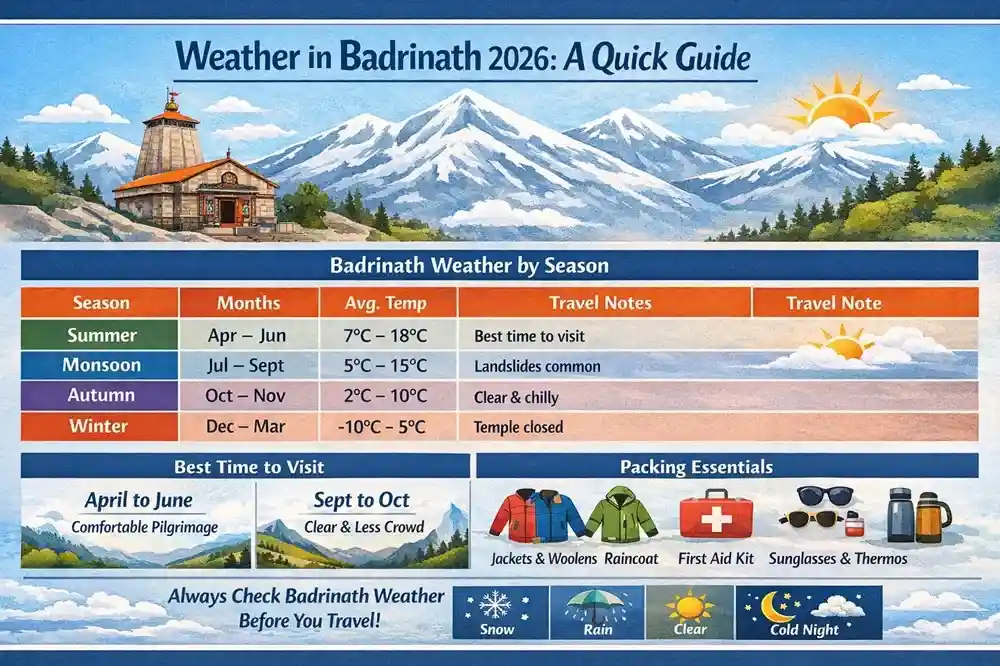
| Season | Months | Weather Pattern | Avg. Temperature | Travel Note |
|---|---|---|---|---|
| Summer | April – June | Pleasant, sunny, cool nights | 7°C – 18°C | Best time to visit |
| Monsoon | July – Sept | Heavy rain, cloudy | 5°C – 15°C | Landslides common |
| Autumn | Oct – Nov | Clear skies, very cold nights | 2°C – 10°C | Good before snowfall |
| Winter | Dec – March | Heavy snowfall, freezing | -10°C – 5°C | Temple closed |
Let’s break this down practically.
Summer (April – June)
This is the safest and most comfortable season.
The snow begins melting around April end. The temple usually opens in late April or early May on Akshaya Tritiya (date decided by temple authorities).
During these months:
-
Days are pleasant and bright
-
Sun feels strong but air stays cool
-
Nights require woolens
-
Roads remain mostly stable
In real life, summer attracts maximum pilgrims. That also means:
-
More crowd
-
Higher hotel rates
-
Traffic near Joshimath
Travel Tip for Summer
Carry:
-
Light woolen jacket
-
Sunglasses (UV is strong at high altitude)
-
Sunscreen
-
Comfortable walking shoes
Most people don’t realize that even at 18°C, wind chill makes evenings feel colder.
Monsoon (July – September)
Monsoon is the most unpredictable period.
Rainfall increases across Chamoli district. According to IMD data trends for the region, July and August receive the heaviest rainfall.
On the ground, this means:
-
Slippery roads
-
Frequent landslides on NH-7
-
Traffic delays
-
Cloud-covered skies
News coverage in Times of India during previous yatra seasons has repeatedly reported temporary route closures due to landslides near Vishnuprayag and Lambagad.
Should You Travel During Monsoon?
Only if necessary.
If you must:
-
Keep buffer days
-
Carry rain protection
-
Follow official weather alerts
-
Avoid night driving in hilly areas
The Weather in Badrinath during monsoon is not ideal for elderly travelers.
Autumn (October – November)
This is a short but peaceful window.
After the rains clear, skies turn crystal blue. Mountain views become stunning. Photography lovers prefer this period.
Day temperature remains manageable. Nights turn sharply cold.
By early November, snowfall risk increases. Temple closing date is usually announced around Diwali period.
What to Carry in Autumn
-
Heavy woolen jacket
-
Gloves
-
Wool cap
-
Thermal innerwear
-
Thermos for warm water
This period feels calm compared to peak summer rush.
Winter (December – March)
Winter here is extreme.
Heavy snowfall covers the town. Temperatures fall below freezing. Roads often shut. The temple remains closed for about six months.
The idol of Lord Badri is shifted to Joshimath during winter months for worship.
Travel during this time is not advised unless you are experienced in snow trekking and equipped for extreme cold.
Best Time to Visit Badrinath
Approach 1: Comfortable Pilgrimage
April to June
Approach 2: Less Crowd + Clear Views
September to October
These months offer stable road conditions and manageable cold levels.
If your priority is safety and smooth darshan, choose early summer.
Also Read:
Packing Guide Based on Season
| Season | Clothes to Carry | Extra Essentials |
|---|---|---|
| Summer | Light woolens, jacket | Sunglasses, sunscreen |
| Monsoon | Raincoat, waterproof shoes | Torch, first-aid kit |
| Autumn | Heavy jacket, thermals | Gloves, thermos |
| Winter | Travel not recommended | — |
Altitude sickness is possible for some people. Walk slowly. Stay hydrated.
Common Mistakes Travelers Make
-
Checking plains weather instead of mountain forecast
-
Underestimating night cold
-
Ignoring monsoon landslide risk
-
Not carrying medicines
-
Planning tight return schedules
Mountain travel needs flexibility.
Safety Tips for Badrinath Climate
-
Always check IMD forecast before departure
-
Monitor Uttarakhand government advisories
-
Avoid traveling during heavy rain alerts
-
Walk slowly at high altitude
-
Keep basic medicines for cold and breathing issues
-
Hire experienced local drivers
From ground observation, most accidents happen because of rushing.
Don’t rush.
How to Check Accurate Forecast
Before starting your journey:
-
Check IMD (India Meteorological Department) website
-
Follow Uttarakhand Tourism updates
-
Monitor live road status near Joshimath
-
Ask local hotel owners about recent conditions
Weather apps sometimes show generic data. Local information is more reliable in Himalayan regions.
FAQs
Is summer too cold in Badrinath?
No. Days are pleasant but evenings require woolens.
Does it snow in October?
Rare in early October. Possible in late October or November.
Is monsoon dangerous?
Heavy rain increases landslide risk. Travel needs caution.
Why is winter travel not advised?
Extreme snowfall and road closure make access difficult.
Final Words
The Weather in Badrinath is not like plains cities. It shifts quickly. Conditions depend heavily on altitude and season.
Summer is comfortable.
Monsoon is risky.
Autumn is clear but cold.
Winter is freezing and inaccessible.
Before starting your pilgrimage in 2026, always check updated Weather in Badrinath reports. Pack according to season. Keep buffer days. And respect the mountains.
When you prepare well, the journey becomes peaceful.
Suggested Tour: